The little extras that make a big difference
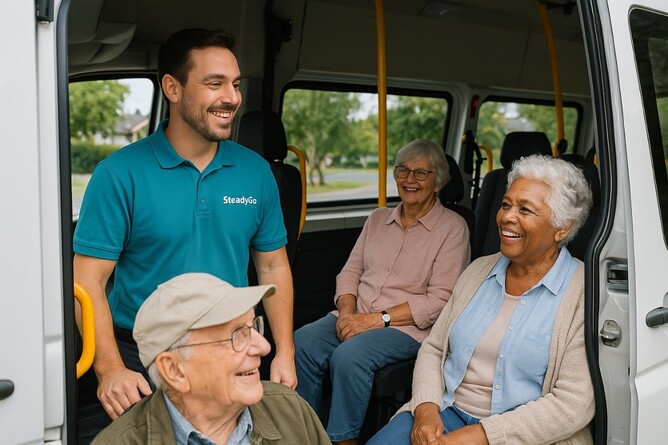
For many older people, the decision to go out is not just about where they are going or how long they will be away. It is about a quieter list of worries -
Will I be too cold or too hot? What if I need the toilet? Who will help with my coat, my bag, my hearing aids, my walker? Will anyone notice if I am uncomfortable, anxious or in pain?
SteadyGo’s answer is simple - you are not just a seat on a bus. Comfort, support and personal care are built into every outing from the moment we arrive to the moment you are safely home again.
(Opinion - the destination matters, but the way someone is treated on the way there matters more.)
Comfort starts before the door
Feeling comfortable on a trip begins long before the vehicle pulls up.
SteadyGo helps passengers and families prepare by making sure people know -
What sort of outing it is – garden, café, drive, market, memory lane
How long they will be out, roughly
What to wear – layers, coats, hats, comfy shoes
Whether they might want a small bag with medication, glasses or hearing aids
This information allows -
Families and staff to lay out clothes and essentials
Passengers to feel organised rather than flustered
Everyone to avoid last-minute panic at the front door
(Opinion - “prepared and calm” is one of the most underrated comfort tools.)
A warm welcome, not a rushed pick-up
The tone for the whole day is often set in the first few minutes.
On arrival, SteadyGo drivers and hosts aim to -
Greet passengers by name
Say a relaxed hello to family or staff
Check quietly how the person is doing today – tired, sore, cheerful, worried
Offer help with coats, bags and mobility aids
There is time to -
Lock the door, check the stove, grab glasses
Ask last-minute questions – “What time will you be back?”
Reassure someone who is a bit unsure or nervous
Those first moments are not treated as an inconvenience. They are treated as part of the care.
Seats that feel like “the right spot”
Where you sit on an outing matters, especially if you live with -
Painful joints
Dizziness or motion sickness
Hearing or vision difficulties
Anxiety in crowds
SteadyGo drivers pay attention to this and may suggest -
Front or mid-vehicle seats for people who get travel sick
Seats closer to doors and aisles for those who find standing difficult
Quieter spots for people with hearing aids or sound sensitivity
Seats near friends for regular passengers who enjoy chatting together
Over time, patterns emerge – “this is Mary’s favourite seat”, “Jim is happier at the front”. Those preferences are remembered and respected where possible.
(Opinion - everyone deserves their version of “my spot”.)
Temperature, light and noise – the comfort triangle
Older bodies are often more sensitive to -
Cold drafts
Overheated spaces
Bright glare or dim light
Loud or constant background noise
SteadyGo works to get the balance right by -
Adjusting heating and air-conditioning based on feedback, not guesswork
Using window shades where possible to reduce harsh glare
Keeping music, if any, low and gentle
Encouraging passengers to speak up – “Too hot?”, “Too bright?”, “Is this ok?”
Comfort is treated as a shared responsibility, not something you just have to put up with.
Toilets, timing and dignity
One of the biggest quiet fears for older people is simple - What if I need the toilet and there isn’t one?
SteadyGo plans outings around -
Regular access to toilets at sensible intervals
Knowing exactly where the accessible facilities are at each stop
Allowing enough time for people to use the bathroom without rush
Drivers and hosts -
Let passengers know when the next toilet stop is coming
Offer a stop sooner if someone looks uncomfortable or asks
Give people privacy and time, while staying nearby for safety if needed
No one is made to feel embarrassed or “difficult” for needing the bathroom. It is part of being human, not a nuisance.
(Opinion - a relaxed bladder is the foundation of a relaxed day out.)
Help with the “fiddly bits”
Little things can become big barriers when joints, eyes and fingers are not what they used to be.
On SteadyGo trips, staff are ready to help with -
Zips, buttons and tricky coat sleeves
Folding and unfolding walkers safely
Managing bags, sticks, hats and scarves
Checking that hearing aids are in place before leaving a noisy venue
Finding glasses and returning them to their cases
They do this with permission, not assumption -
“Would you like a hand with your jacket?”
“Shall I hold your bag while you get settled?”
That balance between support and respect helps people feel cared for, not “handled”.
Hydration, snacks and medication timing
Older people can become dehydrated more easily, especially on warm days or longer trips. SteadyGo keeps an eye on -
Opportunities for drinks – café stops, water access, cups that are easy to hold
Matching the timing of snacks and drinks to what suits the group
Any important medication timing caregivers have shared
Families and facilities help by -
Sending medication in clearly labelled containers, with written instructions
Letting SteadyGo know about any strong preferences or restrictions
SteadyGo does not prescribe or change medication, but can -
Prompt gently – “Is this the usual time you take your tablet?”
Provide water and a calm moment to do so
Adjust the outing schedule slightly, where reasonable, to support key timings
Comfort includes feeling that your normal health routines are respected, not disrupted.
Emotional support on the day
Personal care is not only physical. Emotional comfort matters just as much.
SteadyGo drivers and hosts keep an eye on -
People who seem unusually quiet or withdrawn
Signs of anxiety – fidgeting, repeated questions, looking lost
Signs of distress – tears, frustration, agitation
Their responses are -
Calm – speaking slowly, sitting at eye level where possible
Respectful – “Would you like to sit here instead?”, “Shall we have a little rest?”
Practical – offering a quieter seat, shorter walk, or earlier return to the vehicle
Sometimes, what helps most is simply someone saying, “It’s ok, we’re not in a hurry,” and meaning it.
(Opinion - being properly listened to is a very underrated form of personal care.)
Support with continence and confidence
Many older people live with continence issues they find embarrassing to talk about. This can make them avoid outings altogether.
While SteadyGo is not a nursing service, we support dignity by -
Planning frequent toilet access, as above
Allowing time for clothing changes if needed
Handling any necessary cleanup in the vehicle discretely and practically
Training staff to respond to accidents with kindness, not shock or fuss
Passengers are never shamed for “leaks” or urgent bathroom needs. The focus is on solving the practical problem and protecting dignity.
Partnering with facilities on personal care
For residents in retirement villages, rest homes or hospitals, some personal care (like showering, dressing, continence support or complex medication) will always sit with facility staff.
SteadyGo works alongside them by -
Coordinating pickup times with morning care routines
Sharing information about the nature and pace of the outing
Feeding back any observations – “Mary’s knee seemed to be troubling her more today”
This joined-up approach means -
Residents are not rushed through care to “make the bus”
Staff can prepare the right clothing, footwear and equipment
Everyone knows what kind of day the person has had when they return
Personal care becomes a shared effort, not a tug-of-war.
Comfort for people living with dementia
For passengers with dementia, comfort and support are especially important.
SteadyGo staff use approaches such as -
Introducing themselves clearly, perhaps more than once
Offering simple choices – “Would you like this seat or this one?”
Keeping explanations short and reassuring – “We’re going for a little drive and then a cup of tea.”
Watching for signs of overload and offering a quieter spot or rest
The focus is on -
Keeping the person feeling safe and included
Avoiding sudden changes or confusing instructions
Working with families and facilities on what helps each individual most
(Opinion - a kind tone of voice can often do more good than a long explanation.)
Coming home tired in a good way
A successful outing does not leave people exhausted, sore or frazzled. Ideally, they come home -
Pleasantly tired, not wiped out
Warm, dry and comfortable
With a sense of having been cared for, not “put through their paces”
With something positive to talk about – a view, a taste, a conversation, a memory
Drivers make sure -
People are escorted back to the right door or reception area
Bags, walkers and aids come off the vehicle with them
Staff or family are aware of any important notes for the rest of the day
Those final minutes of the trip are treated as seriously as the first.
Why all this matters
On paper, SteadyGo is a transport and excursions service. In reality, it is often -
A confidence builder for someone who has lost faith in their body
A lifeline for someone who feels stuck at home
A breather for families and staff who carry a lot, quietly
A gentle reminder that older people deserve days that feel good, not just medically safe
Comfort, support and personal care are not “nice extras”. They are the heart of the service.
When people know they will be -
Helped without being bossed
Listened to without being rushed
Looked after without losing dignity
- they are far more likely to say yes to getting out, again and again.
Trip by trip, that is how SteadyGo helps older people keep living, not just existing – with thoughtful comfort, quiet support and personal care woven into every single journey.