The care and planning behind every “yes, I’ll come”
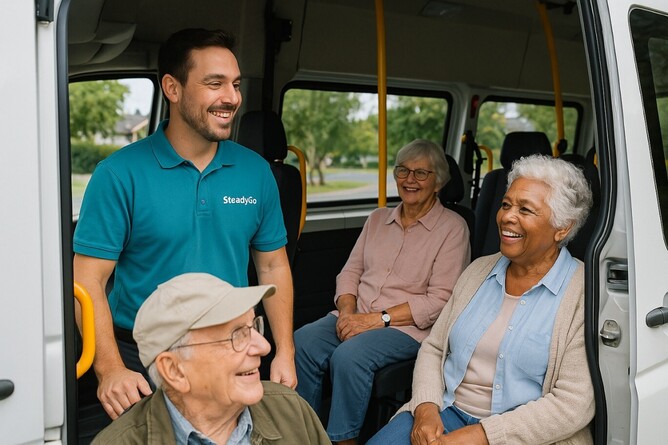
For older people, saying yes to an outing is not just about where you are going. It is about trust.
Can I get in and out of the vehicle safely?
Will they understand my walker, or my wheelchair, or my “iffy” balance?
What if I feel unwell? What if I need the toilet?
This article lifts the curtain a little on how SteadyGo thinks about safety, so passengers, families and facilities can feel confident that every trip is built around care, not chance.
(Opinion - good safety is the kind you can feel without constantly seeing it.)
Safety starts long before the vehicle arrives
A safe outing does not begin at the kerb. It starts at the planning table.
SteadyGo looks at -
Who is travelling – mobility levels, support needs, health concerns
Where you are going – access, toilets, seating, weather, distance
How long it will take – travel time, rests, meal and medication times
What could go wrong – traffic delays, sudden showers, tired passengers
This planning means -
Choosing destinations that suit older bodies and minds
Building in enough time so no one is rushed
Having back-up options if the weather or roads misbehave
Making sure there are proper places to stop, park and turn safely
By the time the vehicle pulls up, a lot of quiet thinking has already been done on your behalf.
(Opinion - a good plan looks deceptively simple from the outside.)
Drivers who understand older bodies, not just roads
Safe transport for older people is about more than a heavy vehicle licence.
SteadyGo drivers are selected and trained for -
Smooth, patient driving – gentle acceleration, careful braking, no racing yellow lights
Clear communication – explaining what is happening, what is next and how long it will take
Practical help – spotting trip hazards, checking seatbelts, steadying arms on steps
Calm presence – staying unflustered if someone is anxious, confused or unwell
They learn to -
Allow extra time for people to get to the door
Check that mobility aids are within reach but safely stowed
Position the vehicle where kerbs, ramps and paths are easiest
Keep an eye on how everyone is coping throughout the day
Passengers are not treated as “freight”. They are treated as guests whose comfort and safety matter from first hello to final goodbye.
Getting in and out safely – the crucial few metres
For many older people, the most stressful part of any trip is the few steps between their front door and their seat.
SteadyGo takes those metres seriously.
On pick-up and drop-off, drivers -
Come to the door where appropriate, rather than staying behind the wheel
Offer a steady arm and take bags, walkers or sticks as needed
Talk through each step – “We have one small step here, then the handrail”
Check that feet, clothing and aids are clear before closing doors
Vehicles are set up with -
Low steps and handrails, or
Hoists and ramps for wheelchairs and people who cannot manage stairs
Once inside, passengers are helped to -
Find a seat that suits their mobility
Sit fully back with feet supported
Have seatbelts fitted comfortably and correctly
Walkers and wheelchairs are secured so they will not move if the vehicle stops suddenly.
(Opinion - no one should feel like they are tackling an obstacle course just to get to their seat.)
Respectful handling of walkers, sticks and wheelchairs
Mobility aids are not an afterthought. Used well, they are safety equipment.
SteadyGo drivers -
Know how to fold, store and return walkers correctly
Secure wheelchairs on hoists and in-vehicle anchor points
Double-check brakes before and after moves
Position aids within easy reach when the vehicle stops
They also understand that -
People may be very attached to their particular walker or chair
It is important to ask before adjusting anything
Some devices have quirks the passenger knows best
That mix of technical know-how and personal respect is what keeps both safety and dignity intact.
Pace that matches older bodies
Rushing and safety do not mix, especially with older passengers.
SteadyGo builds time into every outing for -
Slow, careful transfers
Frequent rest and toilet breaks
Looking around without feeling hustled back to the vehicle
Drivers and hosts watch for early signs of fatigue -
More shuffling or hesitation
Shorter sentences or quieter conversation
Grimacing with each step, or rubbing joints
If needed, they will -
Shorten a walk
Offer an arm or a seat sooner
Suggest an earlier return to the vehicle
Passengers are never made to feel that they are “holding everyone up”. The outing is paced around real humans, not a tight tourist timetable.
(Opinion - safety often looks like “we’ve got time, take your time”.)
Health information, privacy and sensible boundaries
SteadyGo is a transport and outings service, not a medical provider. Even so, basic health information is important for safe planning.
With permission from passengers, families or facilities, SteadyGo may need to know -
Mobility limitations and falls risk
Serious allergies
Conditions like angina, diabetes, epilepsy or dementia
Medication timing that affects meals or breaks
This information is -
Used only to plan and run safe trips
Shared only with staff who need to know to keep the person safe
Handled respectfully, without labelling or fuss
At the same time, SteadyGo is clear about its boundaries -
Drivers are not doctors or nurses
Vehicles are not ambulances
If someone becomes acutely unwell, emergency services may be called and family or facilities notified
That honesty is part of safety too. Everyone knows what SteadyGo can and cannot provide.
Infection control and hygiene
Older immune systems are often more vulnerable. A safe outing in 2025 means thinking about bugs as well as bumps.
SteadyGo supports infection safety by -
Keeping vehicles clean and regularly sanitised
Paying attention to high-touch points like rails, seatbelts and door handles
Encouraging hand hygiene before food and after toilets
Being cautious about travel for anyone who is unwell
Facilities and families can help by -
Letting SteadyGo know if someone is sick or has been exposed to an infectious illness
Being honest if a passenger is not up to travelling that day
(Opinion - staying home with a cold is still an act of kindness to everyone else on the van.)
Clear communication before, during and after the trip
Safety is also about people knowing what is going on.
Before the outing, SteadyGo provides -
Date, approximate pickup time and expected return time
Destination and a general outline – “garden visit with café stop”, “country drive with lookout”
Any special notes – clothing suggestions, money for treats, sunhat, coat
During the outing, drivers and hosts -
Explain where you are heading next and how long it will take
Update people if plans change – traffic, weather, timing
Check in on comfort – “Everyone warm enough?”, “Anyone need the toilet at this stop?”
After the trip, SteadyGo can -
Pass on concerns if someone seemed unwell or different from usual
Note down any useful information for future outings – favourite seats, preferred walking distances, hearing or vision needs
This constant flow of clear information reduces anxiety and prevents unsafe guesswork.
Emergency readiness (without scaring anyone)
Most SteadyGo outings are calm and uneventful. Occasionally, something unexpected happens – a sudden illness, a fall, a road incident elsewhere causing long delays.
Drivers and staff are trained to -
Stay calm and reassuring
Make the vehicle and passengers safe first
Use radios or phones to call for help when needed
Follow agreed procedures for contacting family, facilities or emergency services
They also carry -
Basic first-aid knowledge and kits
Information on passengers’ key conditions and contacts (where provided)
Clear guidance on when to escalate a situation
Passengers usually only see the tip of this – a driver quietly checking someone, a phone call made from the front seat, a change of route when the motorway clogs. That is how it should be. The drama stays in the planning, not in the passenger area.
Partnering with families, facilities and health providers
Safety works best when everyone is on the same page.
SteadyGo encourages -
Facilities to share mobility and care plans relevant to outings
Families to update contact details and mention any new health issues
Health professionals to suggest suitable activity levels where appropriate
In turn, SteadyGo -
Designs outings that respect medical advice
Lets key people know if there was anything notable on a trip
Adjusts seating, routes or pacing when needs change
Is open to feedback if something could be made safer or easier
(Opinion - good safety is always a team sport.)
Emotional safety matters too
Physical safety is only half the story. Older people also need to feel emotionally safe -
Not laughed at for being slow or forgetful
Not pressured into walking further than they want
Not talked over when they are trying to explain something
SteadyGo culture expects drivers and hosts to -
Use people’s preferred names
Listen properly and respond respectfully
Notice when someone is anxious and offer reassurance
Protect privacy when helping with more personal tasks (like toilets or medication timing conversations)
When people feel emotionally safe, they are more likely to speak up early about discomfort, dizziness or confusion – which helps prevent physical incidents as well.
A safe outing is a relaxed outing
The real measure of safety is not just paperwork and procedures. It is how the day feels for the people on board.
A safe SteadyGo trip feels -
Unhurried
Well organised but flexible
Respectful of limitations without fuss
Calm, even when the weather or traffic has other ideas
Passengers can focus on the view, the company and the small pleasures of the day because the “what ifs” have already been thought through.
For families and facilities, that means peace of mind. For older people, it means the freedom to say “yes, I’d love to go” more often – knowing they are in hands that take their safety seriously, quietly and consistently, every kilometre of the way.