Going back to the places where life happened...
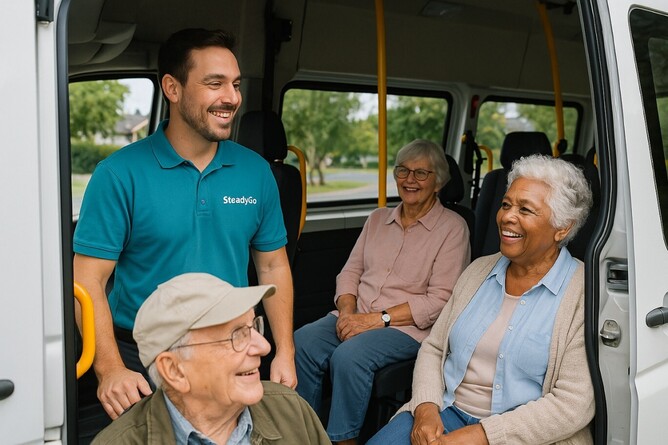
There is a special kind of magic in driving past the house where you raised your kids, the church where you were married, the old rugby ground, or the seaside town where you spent summer holidays.
For older people, these are not just places. They are chapters of a life story. SteadyGo’s “memory lane” outings are designed to gently revisit those chapters, in comfort and with plenty of care.
(Opinion - Google Street View is good, but it has nothing on the real street with a real pie shop.)
Why going back matters
As we age, there is a natural pull towards looking back and making sense of things -
Where did I come from?
What did I do with my time?
Who were “my people”?
Being physically present in old familiar places helps -
Anchor memories that are starting to feel fuzzy
Affirm identity – “this is where I belonged, this is who I was”
Spark stories that younger family may never have heard
You do not have to remember every detail. Just seeing the old school gate or the main street can bring a deep sense of recognition and continuity.
How nostalgia supports wellbeing
Nostalgia sometimes gets dismissed as “living in the past”. In later life, it can actually be very healthy -
Emotional balance – remembering good times can soften present worries
Self-esteem – recalling achievements, relationships and contributions
Connection – stories about the past help bridge generations
A well-planned memory lane outing gives all this a safe space -
Time to say, “I worked in that factory for 20 years.”
Time to quietly feel whatever comes up when you pass the family home.
Time to laugh about disasters that are now safe to remember.
(Opinion - “We survived that” is one of the most powerful sentences an older person can say.)
Gentle structure, not a forced tour
The aim is not to grill people for dates and names. It is to offer a relaxed drive through places that might matter, with chances to pause.
A typical nostalgia trip might include -
The suburb or town where someone grew up
Schools, workplaces, churches or sports grounds
Old neighbourhood shops or main streets
Favourite beaches, rivers or parks
SteadyGo works with families, facilities and passengers to plan -
A route that makes sense – no frantic zig-zagging
A realistic number of stops
Time to sit at a lookout or outside a dairy without rushing
If someone prefers to stay in the vehicle rather than get out, that is absolutely fine. The view from the window is often enough.
Supporting people with memory loss or dementia
For people living with dementia, revisiting familiar places can have mixed effects. Done well, it can be very positive -
Sights and smells may spark long-term memories that are still accessible
Old routines (“this is where we always parked for the shops”) can feel comforting
The overall emotional feeling – “this is my place” – may be more important than facts
SteadyGo staff are mindful that -
Not every memory is a happy one
Some places may trigger sadness as well as warmth
People can tire quickly from emotional as well as physical effort
Trips are planned with -
Calm, unhurried pacing
Gentle prompts rather than testing questions
Flexibility to move on if something feels uncomfortable
The goal is to create moments of recognition and pleasure, not to check how much someone remembers.
Handling the bittersweet moments
Going back can stir up grief as well as joy -
Houses have new owners and new paint
Paddocks have become subdivisions
Businesses and halls have been demolished or rebuilt
Those changes can be confronting. SteadyGo drivers and hosts are prepared for -
Tears as well as laughter
Quiet patches where someone just needs to look and think
Honest comments like “I don’t like what they’ve done there”
What helps is -
Simply acknowledging it – “It has changed a lot, hasn’t it.”
Allowing people to talk about who and what is missing
Balancing sad moments with stops at places that still feel welcoming
(Opinion - nostalgia trips work best when we don’t pretend everything was perfect – we just let people honour what mattered.)
Involving family and whānau
Memory lane outings can be even richer when family help shape them -
Providing a list of meaningful addresses and places
Sharing stories that drivers can gently weave into the route
Sending along old photos that might be fun to reference – “Here’s Mum outside that shop in 1965.”
Sometimes a family member will come on the trip too. In that case, SteadyGo -
Manages the driving, parking and mobility support
Leaves space for the precious conversations only families can have
Keeps an eye on tiredness and emotion so no one is pushed too far
For families further away, simply knowing that Mum or Dad has been “back to the old places” can be very powerful. It reassures them that important parts of their loved one’s story are being respected.
A chance to tell the stories
The real treasure on these outings is not the scenery. It is the stories that come out -
“I met your father on that corner when the bus was late.”
“We used to sneak out of class and climb that tree.”
“This is the hall where I did my first speech and thought I would faint.”
SteadyGo staff are there to -
Listen without rushing
Encourage quieter passengers to share if they want to
Notice when someone is reliving a moment and give them time
Other passengers often join in -
“We had one of those cars too.”
“I remember those old corner dairies.”
In that way, memory lane trips become a shared experience, not just a private one.
Safety, comfort and emotional care
Because these outings can be emotionally loaded, SteadyGo pays attention to -
Physical comfort – accessible vehicles, easy entry/exit, rest stops
Clear timing – how long the trip will be, when they’ll be home
Emotional temperature – checking in quietly if someone seems unsettled
Follow-up – passing on any concerns to family or facility staff (with consent)
Passengers are always free to say -
“I’ve seen enough of this area now, let’s move on.”
“Can we drive past the beach instead?”
“I’d like a cup of tea.”
The outing is there to serve the person, not the other way around.
A gift to the present, not just a visit to the past
It is easy to think memory lane trips are only about “back then”. In practice, they change how people feel now -
More grounded – “I know where I fit in the story of this place.”
More valued – “Someone cared enough to take me back.”
More talkative – with fresh stories to share with staff, family and friends
Carers often notice -
New topics at meal times – “We drove past the old factory today.”
A lift in mood over the next day or two
Occasional “I’d love to go there again” moments that can guide future outings
(Opinion - the past is one of the richest resources older people have – it makes sense to visit it kindly.)
How SteadyGo designs Memory Lane outings
When planning nostalgia tours, SteadyGo -
Talks with the passenger, family or facility about significant places
Maps a route that is realistic for the time and energy available
Builds in breaks at calm, accessible spots
Briefs drivers on key locations and any sensitive topics to avoid
Keeps the focus on kindness, not “covering everything”
Some trips will be light and full of laughter. Others will be quieter and more reflective. Both are valid.
What matters is that older people get the chance to travel through their own story while it still feels like their story – with SteadyGo handling the driving, the details and the gentle respect that these journeys deserve.