Why company on the journey matters as much as the destination
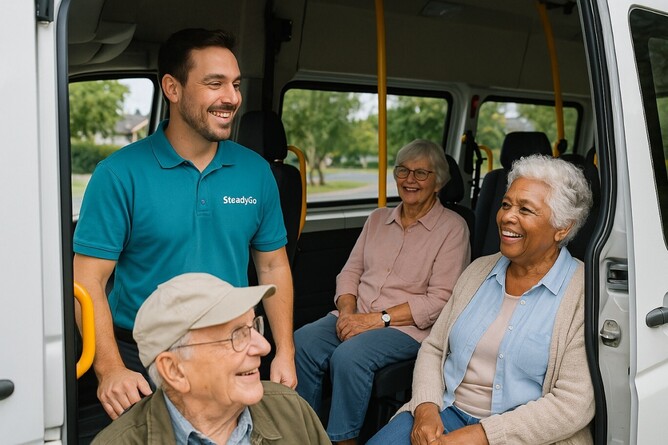
Getting older often means losing pieces of everyday community. The workmates drift away. Old neighbours move. Driving at night feels risky. Before long, weeks can go by with hardly any real conversation.
On paper, a SteadyGo outing is “transport and excursions”. In real life, it is often something much more precious: a chance to be with people, to laugh at small things, and to feel like you still belong somewhere.
(Opinion: the view out the window is lovely, but it is usually the jokes in the van that people remember.)
The quiet weight of loneliness
Many older people will not say “I’m lonely”. They use softer phrases -
“I don’t like to bother anyone.”
“Everyone’s so busy these days.”
“It’s just me and the telly most of the time.”
Behind those comments can be:
Days where the only voice they hear is on the radio
Meals eaten alone at the same small table
A growing feeling that life is happening somewhere else
Loneliness is not just sad. It can affect sleep, appetite, motivation and even physical health. It makes it harder to get moving, harder to ask for help and harder to believe that other people genuinely want you around.
That is why social connection is not a “nice extra” on SteadyGo trips. It is central to how the service is designed.
A friendly welcome, every single time
Belonging starts the moment the vehicle pulls up.
On SteadyGo outings, passengers can expect -
A driver or host who greets them by name
A smile and a simple, “Good to see you, how’s your day going?”
Help getting settled in their seat so they are not flustered or embarrassed
For regular travellers, there is often a small, familiar ritual:
“You like your usual seat, don’t you?”
“We’ve got your friend on board today too.”
“You missed a good trip last week – wait till you hear what happened at the café.”
These tiny moments tell people, You are noticed. You were missed. You belong here.
(Opinion - being treated like a regular is one of the most underrated pleasures in life.)
Small groups, big connections
Huge events can be overwhelming. A SteadyGo outing is different. Group sizes are deliberately modest so people can actually see and hear each other.
This makes it easier to -
Recognise faces from previous trips
Remember names over time
Notice when someone new has joined the group
There is space for:
Light conversation and shared stories
Quiet companionship for those who prefer to listen
Natural little pockets of humour – comments about the weather, the scenery, the scones
Because the same people often book similar types of outings, friendships form gently and organically. No forced icebreakers. Just steady, repeated contact.
Conversation that feels easy, not forced
Many older people worry they will have “nothing to talk about”. SteadyGo trips are full of ready-made conversation starters -
“Did you see that view?”
“I used to work near here.”
“I haven’t had a cheese scone like this for years.”
Drivers and hosts help by -
Pointing out landmarks and asking simple questions – “Anyone got memories of this area?”
Keeping topics light unless someone clearly wants a deeper chat
Making sure no one is completely left out of conversation unless they prefer it that way
Passengers chat about -
Family and pets
Old jobs and hobbies
Local news and changes in town
Past trips with SteadyGo and favourite destinations
Because everyone is roughly in the same stage of life, there is an easy understanding. No one has to explain what it feels like to have dodgy knees, missing friends or grown-up children who live far away. People just “get it”.
(Opinion - a good ride is half scenic tour, half support group with better scenery.)
Space for quiet people too
Not everyone wants to be the life of the party. Some passengers are naturally quieter, shy, or simply tired.
SteadyGo’s social style respects that -
No one is forced to join in group chat
It is perfectly acceptable to simply watch the view or listen
Staff will check in gently – “You ok there?” – without drawing unwanted attention
Friendship has many shapes. For some, it is swapping stories and teasing each other across the aisle. For others, it is simply being in a space where other people are present, where voices and laughter fill the air, even if they say little.
Over time, even very quiet passengers sometimes begin to open up – a comment about a familiar street, a memory triggered by a song on the radio, a compliment about someone’s scarf. Those small steps are noticed and welcomed.
Laughter as medicine you do not need a script for
A van full of older people on a day out can be surprisingly funny.
There are -
Jokes about creaky knees and “original parts”
Gentle teasing about who always finds the best cake
Shared grumbles about the weather or the council roadworks
Drivers and hosts set the tone by -
Joining in with light humour where appropriate
Never laughing at anyone’s expense
Reading the room – knowing when to keep it playful and when to stay quiet
Laughter breaks the ice between strangers. It also sends a clear message: this is not a medical appointment, this is a day out. You are allowed to enjoy yourself.
(Opinion - the sound of a whole van laughing at the same small joke is worth more than most wellness brochures.)
Building a sense of “this is my crowd”
With repeated outings, something important starts to happen.
Passengers begin to feel -
“These are my days – Wednesday is my trip day.”
“Those are my people – I know who I’ll see on the van.”
“This is my place – I feel comfortable with how things work here.”
That sense of belonging is powerful. It can:
Make it easier to leave the house on low-mood days – “I don’t want to miss seeing everyone.”
Give structure to the week – regular outings become anchor points in the calendar
Reduce the sting of other losses – “I may not drive now, but I still have my trips.”
For people who have moved into retirement villages or care facilities, the SteadyGo group can become a second little community that exists beyond the walls of the home.
Cultural respect and inclusion
Belonging is not just about personalities. It is also about culture, language and background being welcomed.
SteadyGo aims to -
Use everyday, respectful language rather than clinical or patronising terms
Pronounce names correctly and be willing to learn when corrections are needed
Acknowledge different traditions, celebrations and ways of seeing the world
Passengers often share -
Childhood stories from different regions and countries
Favourite recipes, sayings and songs
Opinions about how things have changed “back home” or in their iwi, community or industry
These exchanges do not need to be formal. A simple “How did your family used to celebrate this time of year?” can open up rich, warm stories that help everyone understand and appreciate each other more.
Social safety - kindness as a house rule
Shared spaces only feel like belonging if they also feel safe.
SteadyGo staff set clear expectations – not with big lectures, but with how they behave -
Everyone is addressed respectfully
Unkind comments or teasing that goes too far are gently steered away
Arguments are cooled down, not fanned
Sensitive topics are handled with care, especially around grief, politics and health
If someone is having a tough day emotionally, drivers and hosts -
Offer a quieter seat or a chance to sit near them
Check in privately rather than in front of the whole group
Let facilities or families know afterwards if follow-up might help
The message is simple: this is a kind space. You are safe to be yourself here.
(Opinion - a van where people feel safe to relax will do more good than any fancy “wellbeing programme” that forgets about basic kindness.)
Belonging that continues after the trip
The social value of an outing does not vanish when the vehicle door closes at the end.
Back at home or in a facility, trips provide -
New things to talk about at meal times – “You should have seen the view on that hill.”
Fresh stories for phone calls to family – “We went to a lovely café today with the group.”
A sense of shared history – “Remember when we got caught in that shower last month?”
Staff in retirement villages often notice -
People sitting together after a trip who did not talk much before
Photos from outings becoming conversation pieces in lounges
Residents reminding each other about upcoming excursions
Belonging grows in layers – in the van, at the destination, and later in the retelling.
A breather for lonely family too
The “friends and belonging” side of SteadyGo also helps families.
Adult children and relatives sometimes worry that they are the only human contact their older person has. Knowing that Mum, Dad, Nana or Poppa is -
Known by name by drivers and hosts
Part of a small group that laughs and chats
Recognised and welcomed regularly
can ease guilt and worry.
It also gives families more to work with than “How are you today?” calls. They can ask, “Who did you sit next to? What did you talk about? Did anyone tell any good stories?”
That shared social world can strengthen family relationships as well as friendships on the vehicle.
How SteadyGo thinks about “friends, laughter and belonging”
Underneath the timetables and route maps are a few simple beliefs -
Older people deserve more than safe transport – they deserve company.
Laughter and friendly faces are as important to health as ramps and hoists.
Small, regular social contact beats the occasional giant event.
Belonging is built one name, one smile, one shared story at a time.
SteadyGo outings are planned with those beliefs in mind. Routes, stops, timing and group sizes are all chosen not just for access and scenery, but for how easy they make it to talk, to relax and to enjoy being with other people.
Because in the end, the best proof that an outing is working is very simple: people want to come back, not just for where they are going, but for who they are going with.
Trip by trip, that is how SteadyGo helps turn loneliness into lightness – with friends, laughter and a quiet but powerful sense of belonging on every journey.