Why small outings make a big difference to how you feel
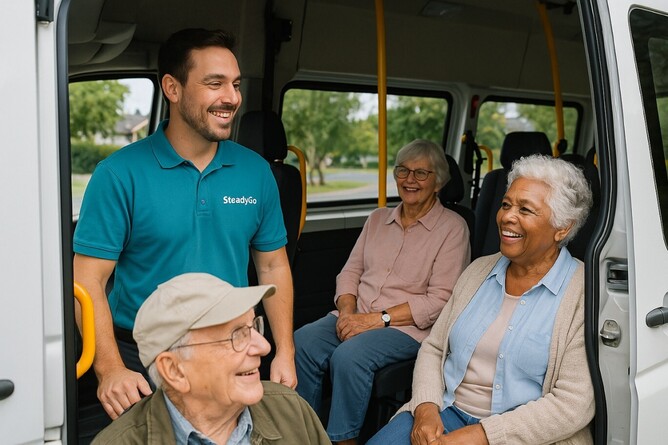
Feeling “a bit flat” is common as we get older. Days blur into each other, energy dips and it can be hard to find anything to look forward to. The tricky part is that low mood often makes people stay home more, which then makes the mood worse. A perfect little loop.
Getting out on regular, gentle excursions is one of the simplest ways to break that loop. It does not need to be dramatic or demanding. A short trip, good company and a change of scene can quietly lift spirits in ways that surprise people.
(Opinion - it is often the anticipation and the stories afterwards that do as much good as the outing itself.)
Why low mood sneaks up in later life
Many older people do not use words like “depressed”. They say things like -
“I just feel a bit useless now”
“There’s nothing much to get dressed up for”
“The days are all the same”
Health issues, bereavement, distance from family, giving up driving, money worries, even the evening news – all of these can chip away at mood over time.
When someone does not have easy, safe transport, every trip becomes a production - favours to ask, taxis to organise, worries about getting in and out of vehicles. It becomes simpler to say, “Oh, don’t worry about me, I’ll just stay home.”
That “just this once” can quietly become the new normal.
The power of having something to look forward to
One of the most powerful medicines for low mood is anticipation.
A SteadyGo excursion gives people -
A date on the calendar
A reason to plan what to wear
Something to talk about with family, carers and neighbours
A sense that life still has new moments to offer
Even before pick-up time, the benefit has begun. People often feel brighter simply knowing that on Thursday they are going to the garden centre, or for a scenic drive, or out for a tea and scone.
It reminds them that they are still part of the world, not just watching it on television.
A change of scenery shifts the mind
We underestimate how strongly our surroundings affect how we feel. Sitting in the same chair, in the same room, looking at the same view can pull our thoughts inwards.
A SteadyGo outing introduces -
Different sights – trees, hills, shops, waterways, farm animals
Different sounds – chatter, birds, traffic, music in the vehicle
Different smells – coffee, sea air, flowers, rain on the road
These simple sensory changes nudge the brain out of “stuck” mode. People who are quiet at home often become quite chatty on the road -
“Oh, I remember when this was all paddocks.” “My father worked in that factory.” “We used to bring the kids here for ice cream after footy.”
Those conversations are not just pleasant. They help keep memory, language and social skills working.
Gentle encouragement without pressure
One risk with outings is that they can feel too hard. People worry -
Will I hold everyone up?
What if I am not feeling well on the day?
What if I get tired or anxious and want to go home?
SteadyGo’s approach is to keep things gentle and flexible.
Itineraries are planned with rest breaks and toilets in mind.
Distances walked are short and there is always somewhere to sit.
Drivers and hosts know that some people need time to move and time to decide.
If someone is not up to the full outing, there are usually easier options.
This kind of supportive environment makes it more likely that people will say “yes” in the first place. They know they will not be pushed beyond what feels comfortable.
(Opinion - older people do not need to be treated like porcelain, but they also do not need to be marched around like recruits.)
Social connection without the stress
Large social events can be overwhelming. Noise, crowds and complicated logistics put many older people off. A small, well-organised outing is a different thing altogether.
On a SteadyGo trip -
Group sizes are manageable
Faces quickly become familiar from repeat outings
Conversation can be light and easy – no one is forced to talk
Quiet people can simply enjoy listening and watching the world go by
For many, the driver becomes a friendly, regular contact who knows their name, their preferences and how they like to travel. That sense of being known and expected is quietly powerful for mood.
Confidence grows with each “good day”
Everyone has the odd bad day. The danger is when people start to think, “I cannot risk going out in case I have one of those.” That fear shrinks their world even further.
Positive outings do the reverse -
“Last time went fine, so maybe I can try this new trip.”
“I managed the garden walk; maybe next time I will stay for lunch too.”
“I coped better than I thought – perhaps I am not as frail as I feel.”
Each little success builds confidence. That confidence supports better mood. Better mood encourages more activity. It becomes a positive loop instead of a negative one.
How SteadyGo designs outings with mood in mind
Every SteadyGo excursion is planned with emotional wellbeing as well as logistics in mind -
Clear information ahead of time so people know what to expect
Friendly check-ins on arrival, noticing how people are feeling
Balanced days with a mix of scenery, conversation and quiet time
Support with the “fiddly bits” – steps, seatbelts, walkers, bags
Safe, calm driving that helps passengers relax and enjoy the view
The goal is not just to “transport clients”. It is to create days that feel safe, purposeful and enjoyable.
The takeaway for families and carers
If you care about an older person whose mood has dipped, encouraging them onto a well-supported outing can be a kind, practical step.
It offers them -
A reason to get up, get dressed and get out
Safe social contact and gentle stimulation
A reminder that life still contains new moments of pleasure
It offers you peace of mind that they are travelling with people who understand older bodies, older minds and the art of making days feel worthwhile.
Because sometimes, the difference between “just getting by” and “feeling more like myself again” is as simple as having somewhere good to go and someone kind to take you there.